Which timing belt should be chosen for the yarn-feeding drive system of a circular knitting machine? An application case study of the TT5 timing belt.
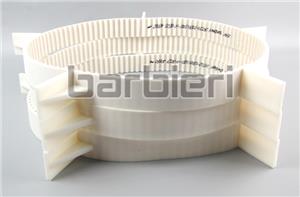
Circular knitting machines are primary mass-production tools in the textile industry. They rely on a combination of motors, timing belts, gears, and yarn-feeding systems to carry out the knitting process. The Barbieri TT5 timing belt—commonly referred to in the industry as a "circular knitting machine toothed belt"—is specifically designed for the yarn-feeding drive systems of these machines. Constructed from polyurethane with a Kevlar cord core, it typically comes in a 10mm width (with yellow and blue color options available upon request). The belt features a compact design, high wear and crack resistance, and quiet operation; it ensures precise, stable yarn delivery, thereby reducing equipment malfunctions and maintenance costs.
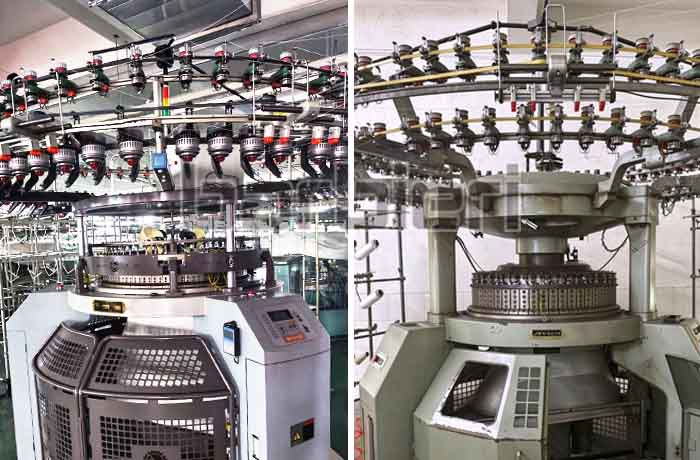
TT5 timing belt is used in the yarn-feeding drive system of circular knitting machines.
Circular knitting machines are specialized production units widely used in textile factories for the mass manufacturing of various knitted fabrics.
The machine’s overall drive system consists of a frequency converter, a variable-speed motor, a timing belt, a drive-shaft gear, a main circular gear, a needle cylinder, and a yarn-feeding creel (or disc).
The frequency converter regulates the motor's operating speed. The motor drives the gear on the main shaft via the timing belt, which in turn transmits power to the main circular gear.
The main circular gear drives the continuous rotation of the needle cylinder and the knitting needles, facilitating the fabric-knitting process. Simultaneously, the main shaft drives the overhead yarn-feeding system, ensuring a consistent and metered supply of yarn.
Because circular knitting machines are designed for long-term, continuous operation, the belts must endure frequent, high-speed bending and constant meshing. Consequently, they require exceptional tensile strength, wear resistance, and dimensional stability.
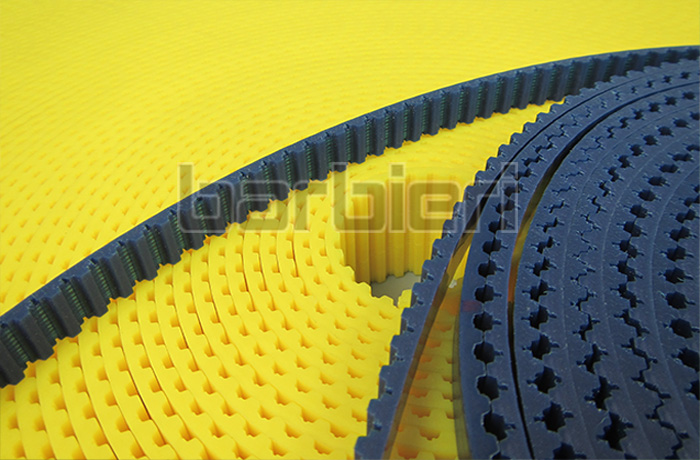
Barbieri TT5 Circular Knitting Machine Belt – Specifications Table
Item | Description |
Product Name | TT5 Timing Belt (Commonly known as: Circular Knitting Machine Timing Belt) |
Brand | Barbieri |
Applicable Equipment | Circular Knitting Machines (specifically for yarn-feeding drive systems) |
Belt Material | Polyurethane (PU) |
Tensile Reinforcement | Kevlar cord core |
Standard Width | 10mm |
Product Types | Seamless (endless) belts, spliced belts, open-ended belts |
Available Colors | Yellow, Blue |
Key Features | Compact design, wear-resistant, tear-resistant, stable load-bearing capacity, low-noise operation |
Structural Features and Application Advantages of TT5 Timing Belts
1. Stable Material Structure, Ideal for Textile Transmission Conditions
Barbieri TT5 timing belts are manufactured as a single, integrated polyurethane unit, featuring a wear-resistant surface that does not shed particles. They incorporate an internal Kevlar cord core, which provides exceptional tensile strength and allows the belt to withstand the high-frequency bending motions typical of textile machinery.
2. Enhanced Transmission Efficiency for Consistent Fabric Quality
The TT5 timing belt features a lightweight, compact tooth profile, ensuring minimal transmission loss and high efficiency.
It delivers uniform power output during yarn feeding, ensuring a stable supply from the yarn creel. This effectively prevents defects—such as horizontal streaks or uneven patterns in the fabric—that can otherwise be caused by fluctuations in the transmission system.
3. Multiple Configurations to Suit Diverse Production Needs
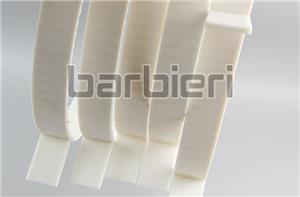
TT5 timing belts for circular knitting machines are available in three configurations—open-ended, seamless, and spliced—to accommodate various procurement requirements.
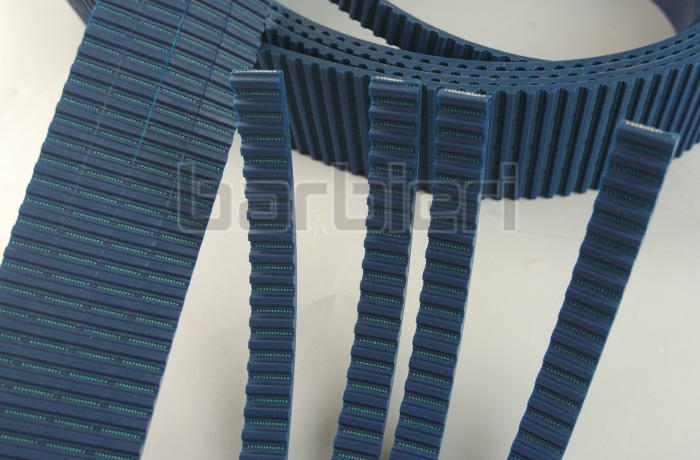
Selection and Usage Guidelines for Circular Knitting Machine Belts:
* Must be used with compatible TT5-specific timing pulleys. Using non-matching pulleys—where tooth profile parameters do not align—can lead to poor meshing, tooth skipping, and unstable yarn feeding, ultimately reducing knitting precision.
* In textile workshops, yarn lint and dust can easily accumulate within the tooth grooves, interfering with the belt’s meshing. Regular cleaning of these grooves is required.
* While polyurethane (PU) material performs well in environments with dry dust, it is not resistant to heavy oil contamination or corrosive chemical agents. Prolonged exposure to these substances will accelerate hardening, cracking, and aging of the belt.
Frequently Asked Questions (FAQs)
Q1: What is the formal technical name for the "toothed belts" commonly used in circular knitting machines?
In the circular knitting machine industry, these are formally classified as "TT5 timing belts"—a type of transmission belt specifically designed for yarn feeding in circular knitting machines.
Q2: What is the function of the Kevlar cord core inside a TT5 timing belt?
The Kevlar cord core serves as a high-strength tensile layer. It enhances the belt's overall tensile strength, improves resistance to fatigue caused by high-frequency bending, minimizes belt elongation and slackening, and ensures consistent yarn-feeding precision over time.
Q3: What are the standard specifications and colors for TT5 timing belts used in circular knitting machines?
The industry-standard width is 10mm. These belts are available in yellow or blue and come in three structural configurations: open-ended, spliced (joined) loops, or seamless (endless) loops.
Q4: What are the environmental requirements for using TT5 timing belts in a textile workshop?
They are suitable for standard textile production environments—characterized by ambient temperatures, dry conditions, and light levels of airborne lint. They are not intended for extreme conditions involving heavy oil contamination, chemical corrosion, or high temperature and humidity; such harsh environments will significantly shorten the belt's service life.
Q5: In which part of a circular knitting machine are TT5 timing belts primarily used?
TT5 timing belts are used in the yarn-feeding transmission system of circular knitting machines. The motor transmits power through the belt to drive the main shaft, which in turn rotates the overhead yarn-feeding creel (or yarn-feeding wheel). This ensures a precise, metered supply of yarn, resulting in uniform fabric quality.
Product Summary and Quality Compliance Statement
Barbieri TT5 synchronous belt is a specialized drive component designed for yarn-feeding systems in circular knitting machines. Constructed with a wear-resistant polyurethane base and a high-tensile Kevlar core, the belt offers stable power transmission, low-noise operation, high tear resistance, and excellent dimensional stability. It effectively addresses common issues such as inconsistent yarn feeding, fabric defects, and the need for frequent maintenance.
Available in seamless, spliced, or open-ended configurations and a variety of colors, these belts are compatible with most circular knitting machine models and production environments. Every product undergoes rigorous manufacturing processes and batch-based quality inspections, strictly adhering to industry standards for textile machinery drive components to ensure consistent quality and reliable performance.
Proper selection, correct installation, and regular maintenance can significantly reduce equipment downtime, lower operational costs, and ensure a stable yield of high-quality fabric. Please contact our sales team for technical specifications, sample requests, or bulk procurement inquiries.