The Relationship Between PU, CPU, and TPU Timing Belts; Differences Between CPU and TPU Timing Belts
"PU" stands for polyurethane; thus, "PU timing belt" is a broad category encompassing both CPU (cast polyurethane) and TPU (thermoplastic polyurethane) timing belts. Simply put, PU timing belts include both CPU and TPU varieties. While both are made of polyurethane, they differ in molecular structure and manufacturing processes, resulting in distinct mechanical properties, processing capabilities, and application suitability. CPU timing belts are made of cast polyurethane, formed by pouring and curing liquid raw materials. As a thermoset material, they do not melt when heated; consequently, they cannot be joined via heat welding, nor can accessories be attached later using heat-fusion methods.
CPU timing belts are typically seamless, integrally molded endless belts featuring small-to-medium tooth profiles. They offer excellent wear resistance and length stability, along with superior physical and chemical stability. With high tooth profile precision and tight dimensional tolerances, they ensure accuracy in length and thickness, making them suitable for various high-performance drive applications. Their normal operating temperature range is -25°C to +80°C (withstanding up to +110°C for short periods).
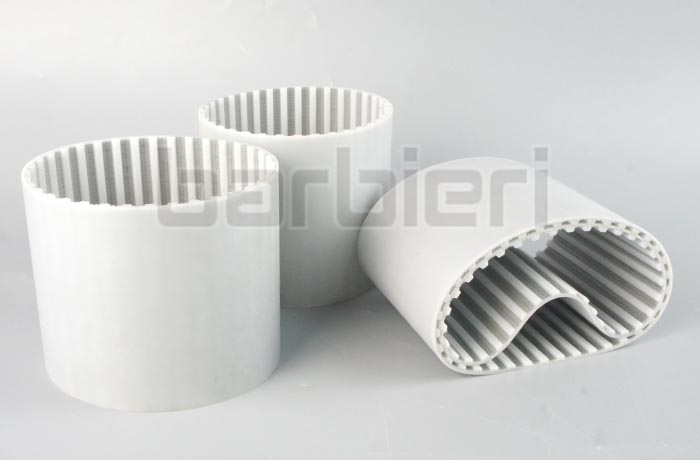
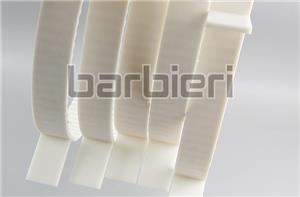
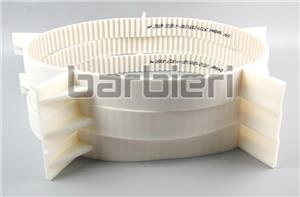
TPU timing belts are made of thermoplastic polyurethane and formed via extrusion. As a thermoplastic material, they can be melted and reshaped. They are available as open-ended belts or can be heat-welded into endless loops. They also facilitate secondary processing—such as the attachment of cleats, guide rails, or special backing materials—offering high customization flexibility.
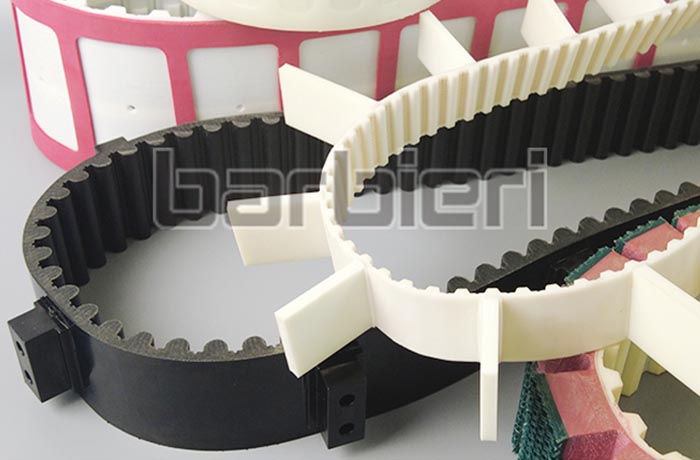
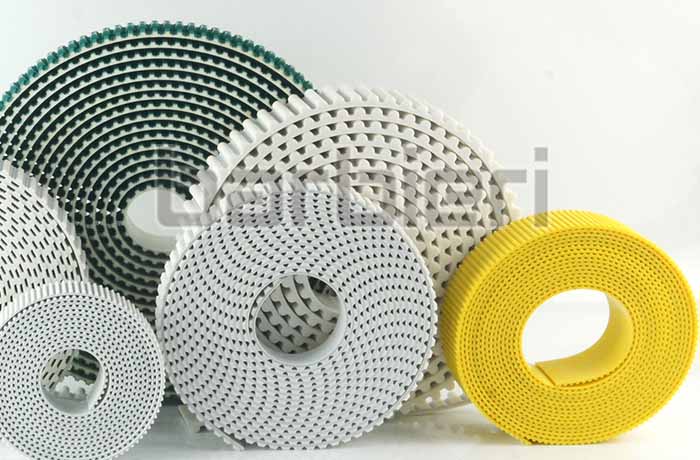
TPU timing belts are available in various configurations, including open-ended, heat-welded endless, seamless integrally molded, and specially processed belts. They come in a full range of tooth profiles—small, medium, and large—perfectly suited for diverse torque and load requirements in both power transmission and conveying applications, ranging from light-duty precision transport to heavy-duty industrial drives. They feature excellent wear and tear resistance and dimensional stability, along with good resistance to oil and chemical corrosion; they operate smoothly and quietly, offering long-lasting durability and resistance to deformation. Normal operating temperature: -10°C to +60°C (can withstand up to +80°C for short periods).
In summary:
CPU (Cast Polyurethane): Features a seamless, one-piece endless belt structure with high precision; however, it cannot undergo secondary thermal processing, meaning it cannot accommodate attachments like cleats or guide rails. Usage is limited to the belt body itself, restricting selection options.
TPU (Thermoplastic Polyurethane): Offers a wide range of tooth profiles and supports thermal processing for various attachments. It is highly versatile and adaptable to a vast array of non-standard power transmission and conveying applications, making it the more common choice for standard operating conditions.
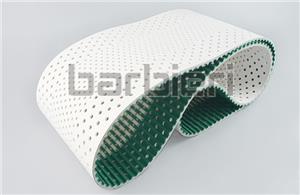
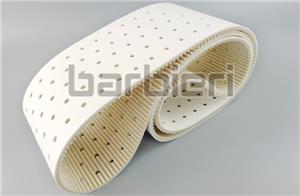
Barbieri offers customizable CPU and TPU timing belts. Customers can specify colors, tooth profiles, lengths, and widths. Options include seamless endless belts, open-ended belts, and spliced belts. Advanced processing—such as the addition of cleats, guide rails, and special backing materials—is available to suit diverse transmission and conveying requirements, providing reliable solutions for various types of automation equipment.